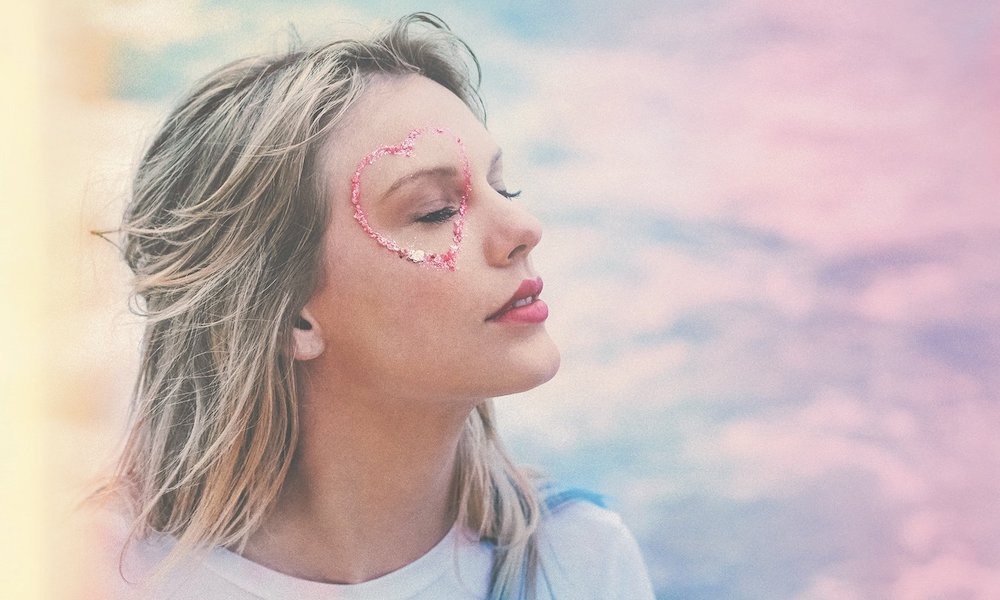
Since 2006 when Taylor Swift released her first album, Taylor Swift, she has evolved as an artist, dabbling and experimenting with various genres. Her evolution and stylistic changes have been embraced by some, criticized by many, but did not stop her drive or success. The four main genres into which Swift has been placed over the past decade and a half include country, country pop, indie pop, and pop. The creation of her newest album, “Lover”, is a blend of the previously stated genres, and the song selected for this essay, the title song of the album, blends the genres together to provide a preview for the album that was released after the single.
Swift began her career as a country singer and has returned to many of her country roots, taking advantage of the fusion genre country pop to appeal to a wider audience. Country music has roots in the southern regions of the United States, and the country genre uses themes to relate to the everyday, blue collar man. One of the most apparent stylistic elements of a country song is the twang heard in the performers voice. This aspect is then combined predominantly with string instruments creating simple yet appealing ballads or dance tunes (Britannica). Substantive elements of the country music genre are created by lyrics written in the manner of a narrative. Major topics discussed include tragedy, love, religion, booze, patriotism, and lifestyle (Rogers). These topics are employed to create music relatable to the everyday listener. A study conducted by Peter Lewis shows the four major themes of country music include “it’s all over”, “it’s not working out”, “love and devotion”, and “the right way to live” (Smith). These themes define the situations described in a country song.
In order to broaden the appeal of country music in the 1960s, a fusion genre emerged with artists removing some of the twang and overly southern elements to produce a more popular country sound. While still relying on the classic themes, topics, and instruments country music uses, modern stars like Sam Hunt, Kacey Musgraves, and Taylor Swift incorporate lyrics and sounds that are more relatable for the masses. These artists may use music synthesizers or twist the topics to somewhat reject southern/ country standards (Hight). Country pop combines stylistic elements and instrumentation of traditional country with other musical forms. The themes still use narrative, but the topics are broader to include a wider variety of people. The situations presented in country pop may not relate to southern culture but still address the categories discussed by Peter Lewis.
So, where does Taylor Swift’s “Lover” fit in to all of this? Swift uses the majority of the aspects seen in the traditional country category, while removing the twangy accent and conservative themes, ultimately blending into the pop country genre. The song uses a guitar throughout and there are some accents created by percussion. From a substantive point of view, the song tells the story of her falling in love after a life of heartbreak. This combines the themes of love and devotion and the right way to live in terms of love. She also incorporates the topic of lifestyle through the video, imaging her life and her love story and showing the way she views living in the perfect relationship.
The next genre that “Lover” has been tagged with is indie pop. Indie pop is the sounds of an artist on the brink of mainstream but that may seem “too whimsical and innocent; too weird; too sensitive and melancholy; too soft and delicate; too dreamy and hypnotic; to personal and intimately revealing in its lyrics” (Indie Pop Music Genre Overview). Stylistically, the sounds of indie pop may be less electronic or loud than traditional pop music and the lyrics focus more on the situation of the outsider than the popular persona. Another defining factor would be that the productions of indie pop are typically lower budget.
Based on these factors, this is the genre that “Lover” fits into the least, however, there are clear aspects that tie the song into the genre. For example, in current popular music the tempo and melodies are incredibly upbeat and electronic instruments are used over physical instruments. The song “Lover”, in contrast uses actual instruments, specifically acoustic guitar and drums, and has a slower tempo, creating a dreamy love ballad. The video itself takes advantage of colors creating a whimsical mood. Where Swift deviates most from the indie pop genre is in the fact that she is anything but low budget, as her net worth is upwards of $360 million, giving her the funds to spend ample amounts on production (Hoffower).
The final category that should be discussed in regard to the song “Lover” is popular music. Popular music is constantly changing, making situational elements the most important factor for defining this genre of music. Common themes and topics in popular music right now include body positivity, finding someone to enjoy and love you for who you are, female empowerment, and of course, the everlasting theme of love. The major sounds heard in pop music currently include synthesized and electronic beats. The things however, that never change about pop music, and the things that make songs remain popular are “short songs with a strong beat and simple tunes that are easy to remember” according to Macmillan Dictionary. Simply stated, popular music is catchy.
Taylor Swift’s “Lover” is not as upbeat as many popular culture songs, but it does include some of the central themes. “Lover” is about finding an unconditional love after a long string of heartbreaks. This ultimately makes young people and fans more hopeful about finding their future love. The song is somewhat repetitive, and the chorus is simple to remember.
Can I go where you go?
Can we always be this close forever and ever?
And ah, take me out, and take me home (forever and ever)
You’re my, my, my, my lover
The catchiness and simplicity of the song is what connects it to the popular genre the most.
It is clear that that the song “Lover” fits best in the category of pop country based on the various elements of the song. However, Swift incorporates elements of country, country pop, indie pop, and pop in order to appeal to the widest audience and fan base possible. It is very interesting to look at a song through the lens of many genres instead of pigeonholing it to one specific type of music. This shows the versatility of rhetoric to appeal to many groups.
Works Cited
Hight, Jewly. “How The Sound Of Country Music Changed.” NPR, NPR, 20 Mar. 2018, http://www.npr.org/sections/therecord/2018/03/20/594037569/how-the-sound-of-country-music-changed.
Hoffower, Hillary. “Taylor Swift Just Turned 30, and She’s Already Worth at Least $360 Million. Here’s How the Pop Superstar Makes and Spends Her Ever-Growing Fortune.” Business Insider, Business Insider, 13 Dec. 2019, www.businessinsider.com/taylor-swift-net-worth-spending-2018-8.
“Indie Pop Music Genre Overview.” AllMusic, www.allmusic.com/style/indie-pop-ma0000004494.
“Pop Music (Noun) American English Definition and Synonyms: Macmillan Dictionary.” Pop Music (Noun) American English Definition and Synonyms | Macmillan Dictionary, www.macmillandictionary.com/us/dictionary/american/pop-music.
Rogers, Ashley. “The Ten Biggest Tropes in Country Music.” Westword, 4, 23 Jan. 2019, http://www.westword.com/music/the-ten-biggest-tropes-in-country-music-5694846.
Smith, Lindi. “Chart Shows the 4 Themes in Country Music Over 50 Years.” Wide Open Country, 3 May 2016, http://www.wideopencountry.com/chart-shows-4-themes-country-songs-50-years/.
The Editors of Encyclopaedia Britannica. “Country Music.” Encyclopædia Britannica, Encyclopædia Britannica, Inc., 14 Feb. 2019, http://www.britannica.com/art/country-music.
Willman, Chris. “Taylor Swift Stands to Make Music Business History as a Free Agent.” Variety, 5 Sept. 2018, variety.com/2018/music/news/taylor-swift-stands-to-make-music-business-history-as-a-free-agent-1202918336/.

 Samantha Levinson