Freshman year of college, I was given the assignment of writing an autobiography. I thought a lot about who I am, where I am from, and how I would present all of this information. I sat down to begin brainstorming and as I got out my computer, I realized the best way to sum up who I am is to look at the stickers on my laptop.
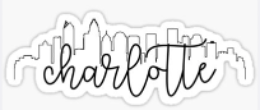
Charlotte sticker:
I was born and raised in Charlotte North Carolina. Living in Charlotte gave me amazing opportunities, friends, and will always be the place I call home. In Charlotte, I played on travel lacrosse teams and my high school varsity team. I participated in volunteer work and spent much of my time with the Charlotte Jewish community.
Israel and Oy Vey Stickers:
Being Jewish is the biggest part of my life. The majority of things I have done have had a connection to Judaism. I attended a Jewish preschool and through tenth grade participated in Hebrew school. I truly found my niche in the Jewish community in ninth grade when I joined a teen led Jewish organization, BBYO. In BBYO, I expanded my leadership skills, made friends that will last a life time, and had experiences locally and internationally that changed my life forever.
With BBYO, I participated in a trip called The March of the Living, a two-week trip to Poland and Israel overlapping with Yom Hashoa (Holocaust Remembrance Day), Yom Haatzmaot (Israeli Independence Day) and Yom Hazikaron (Israeli Memorial Day). On the trip, I visited Auschwitz, Birkenau, Majdnek, and Treblinka. I marched alongside 10000 Jewish teens from Auschwitz to Birkenau and then went to Israel. This trip brought me so much closer to my Judaism. Through this trip I not only gained knowledge about the Holocaust, but found my love of education through travel. Since then I have studied in Havana Cuba and Granada Spain.
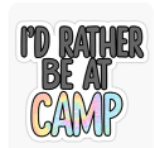
I’d rather be at camp sticker:
Another fundamental aspect of my life is sleepaway camp. The past twelve summers I have attended Camp Barney Medintz, a Jewish sleep away camp in Cleveland, Georgia. Camp to me, is the safest, happiest, and most inspiring place on earth. My eight summers as a camper gave me life changing experiences including a three-day hike on the Appalachian trail, spending 24 hours in the woods alone, and a 6-day trip out of camp where we went white water rafting, zip-lining and so much more. My four years on staff allowed me to give back to a place that gave me so much and to form bonds with campers that shared a love with me of my summer place.
Camp is always on my mind and throughout the school year I wanted to find a way to make camp a part of my everyday life. My involvement with Wayfinders organization kept camp in my life during the school year. Wayfinders sends underserved children in the Charlotte Mecklenburg School System who show good character and academic potential to sleepaway camp all expenses paid. My part in the organization involved coordinating the annual clothing drive and planning activities for events throughout the school year. More recently, I have worked with the director and administrative assistant to provide resources for and improve communication with the families.
Empowered sticker:
I am a strong, passionate, empowered young woman and my goal for the future is to find a way to make an impact in lives of others.
Lastly, just a few of my favorite things:
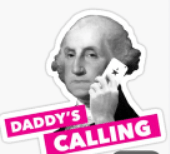
Mind at work and Daddy’s calling stickers:
I am a huge Broadway fan!
Giraffe Sticker:
Giraffes are my favorite animals.
Phish Food Ice Cream Sticker:
I love anything chocolate especially Ice cream and my favorite flavor is Ben and Jerry’s Phish Food.
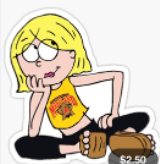
Lizzie McGuire In a Maryland Shirt:
As a child, my favorite show was Lizzie McGuire and of course I love the university of Maryland! Go Terps!
Defining who I am seemed like a very difficult task because the definition continues to change daily. The stickers on my computer are just a few core aspects of my life that will never change.
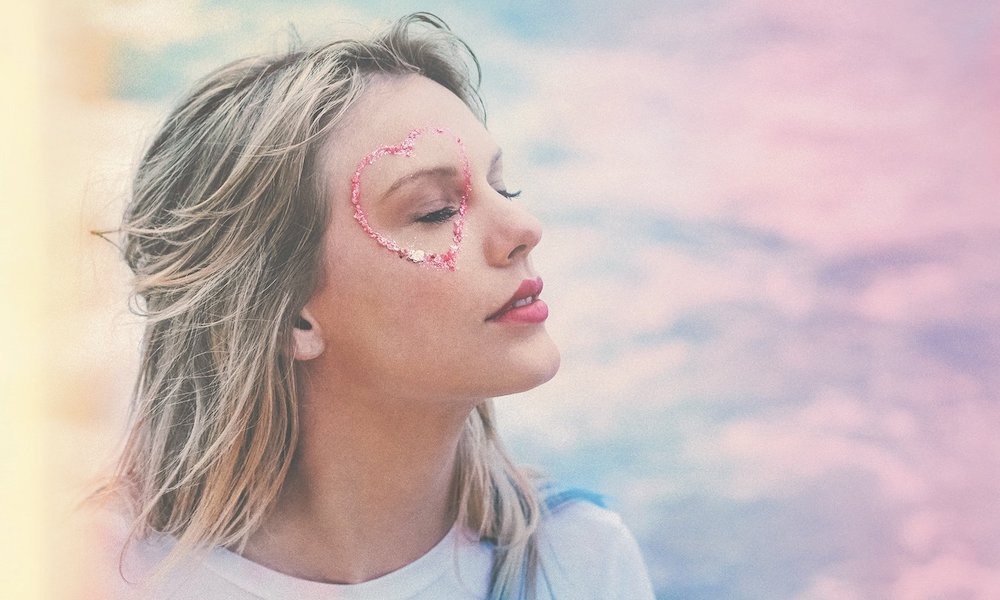
Since 2006 when Taylor Swift released her first album, Taylor Swift, she has evolved as an artist, dabbling and experimenting with various genres. Her evolution and stylistic changes have been embraced by some, criticized by many, but did not stop her drive or success. The four main genres into which Swift has been placed over the past decade and a half include country, country pop, indie pop, and pop. The creation of her newest album, “Lover”, is a blend of the previously stated genres, and the song selected for this essay, the title song of the album, blends the genres together to provide a preview for the album that was released after the single.
Swift began her career as a country singer and has returned to many of her country roots, taking advantage of the fusion genre country pop to appeal to a wider audience. Country music has roots in the southern regions of the United States, and the country genre uses themes to relate to the everyday, blue collar man. One of the most apparent stylistic elements of a country song is the twang heard in the performers voice. This aspect is then combined predominantly with string instruments creating simple yet appealing ballads or dance tunes (Britannica). Substantive elements of the country music genre are created by lyrics written in the manner of a narrative. Major topics discussed include tragedy, love, religion, booze, patriotism, and lifestyle (Rogers). These topics are employed to create music relatable to the everyday listener. A study conducted by Peter Lewis shows the four major themes of country music include “it’s all over”, “it’s not working out”, “love and devotion”, and “the right way to live” (Smith). These themes define the situations described in a country song.
In order to broaden the appeal of country music in the 1960s, a fusion genre emerged with artists removing some of the twang and overly southern elements to produce a more popular country sound. While still relying on the classic themes, topics, and instruments country music uses, modern stars like Sam Hunt, Kacey Musgraves, and Taylor Swift incorporate lyrics and sounds that are more relatable for the masses. These artists may use music synthesizers or twist the topics to somewhat reject southern/ country standards (Hight). Country pop combines stylistic elements and instrumentation of traditional country with other musical forms. The themes still use narrative, but the topics are broader to include a wider variety of people. The situations presented in country pop may not relate to southern culture but still address the categories discussed by Peter Lewis.
So, where does Taylor Swift’s “Lover” fit in to all of this? Swift uses the majority of the aspects seen in the traditional country category, while removing the twangy accent and conservative themes, ultimately blending into the pop country genre. The song uses a guitar throughout and there are some accents created by percussion. From a substantive point of view, the song tells the story of her falling in love after a life of heartbreak. This combines the themes of love and devotion and the right way to live in terms of love. She also incorporates the topic of lifestyle through the video, imaging her life and her love story and showing the way she views living in the perfect relationship.
The next genre that “Lover” has been tagged with is indie pop. Indie pop is the sounds of an artist on the brink of mainstream but that may seem “too whimsical and innocent; too weird; too sensitive and melancholy; too soft and delicate; too dreamy and hypnotic; to personal and intimately revealing in its lyrics” (Indie Pop Music Genre Overview). Stylistically, the sounds of indie pop may be less electronic or loud than traditional pop music and the lyrics focus more on the situation of the outsider than the popular persona. Another defining factor would be that the productions of indie pop are typically lower budget.
Based on these factors, this is the genre that “Lover” fits into the least, however, there are clear aspects that tie the song into the genre. For example, in current popular music the tempo and melodies are incredibly upbeat and electronic instruments are used over physical instruments. The song “Lover”, in contrast uses actual instruments, specifically acoustic guitar and drums, and has a slower tempo, creating a dreamy love ballad. The video itself takes advantage of colors creating a whimsical mood. Where Swift deviates most from the indie pop genre is in the fact that she is anything but low budget, as her net worth is upwards of $360 million, giving her the funds to spend ample amounts on production (Hoffower).
The final category that should be discussed in regard to the song “Lover” is popular music. Popular music is constantly changing, making situational elements the most important factor for defining this genre of music. Common themes and topics in popular music right now include body positivity, finding someone to enjoy and love you for who you are, female empowerment, and of course, the everlasting theme of love. The major sounds heard in pop music currently include synthesized and electronic beats. The things however, that never change about pop music, and the things that make songs remain popular are “short songs with a strong beat and simple tunes that are easy to remember” according to Macmillan Dictionary. Simply stated, popular music is catchy.
Taylor Swift’s “Lover” is not as upbeat as many popular culture songs, but it does include some of the central themes. “Lover” is about finding an unconditional love after a long string of heartbreaks. This ultimately makes young people and fans more hopeful about finding their future love. The song is somewhat repetitive, and the chorus is simple to remember.
Can I go where you go? Can we always be this close forever and ever? And ah, take me out, and take me home (forever and ever) You’re my, my, my, my lover
The catchiness and simplicity of the song is what connects it to the popular genre the most.
It is clear that that the song “Lover” fits best in the category of pop country based on the various elements of the song. However, Swift incorporates elements of country, country pop, indie pop, and pop in order to appeal to the widest audience and fan base possible. It is very interesting to look at a song through the lens of many genres instead of pigeonholing it to one specific type of music. This shows the versatility of rhetoric to appeal to many groups.
Hoffower, Hillary. “Taylor Swift Just Turned 30, and She’s Already Worth at Least $360 Million. Here’s How the Pop Superstar Makes and Spends Her Ever-Growing Fortune.” Business Insider, Business Insider, 13 Dec. 2019, www.businessinsider.com/taylor-swift-net-worth-spending-2018-8.
The Editors of Encyclopaedia Britannica. “Country Music.” Encyclopædia Britannica, Encyclopædia Britannica, Inc., 14 Feb. 2019, http://www.britannica.com/art/country-music.
Willman, Chris. “Taylor Swift Stands to Make Music Business History as a Free Agent.” Variety, 5 Sept. 2018, variety.com/2018/music/news/taylor-swift-stands-to-make-music-business-history-as-a-free-agent-1202918336/.
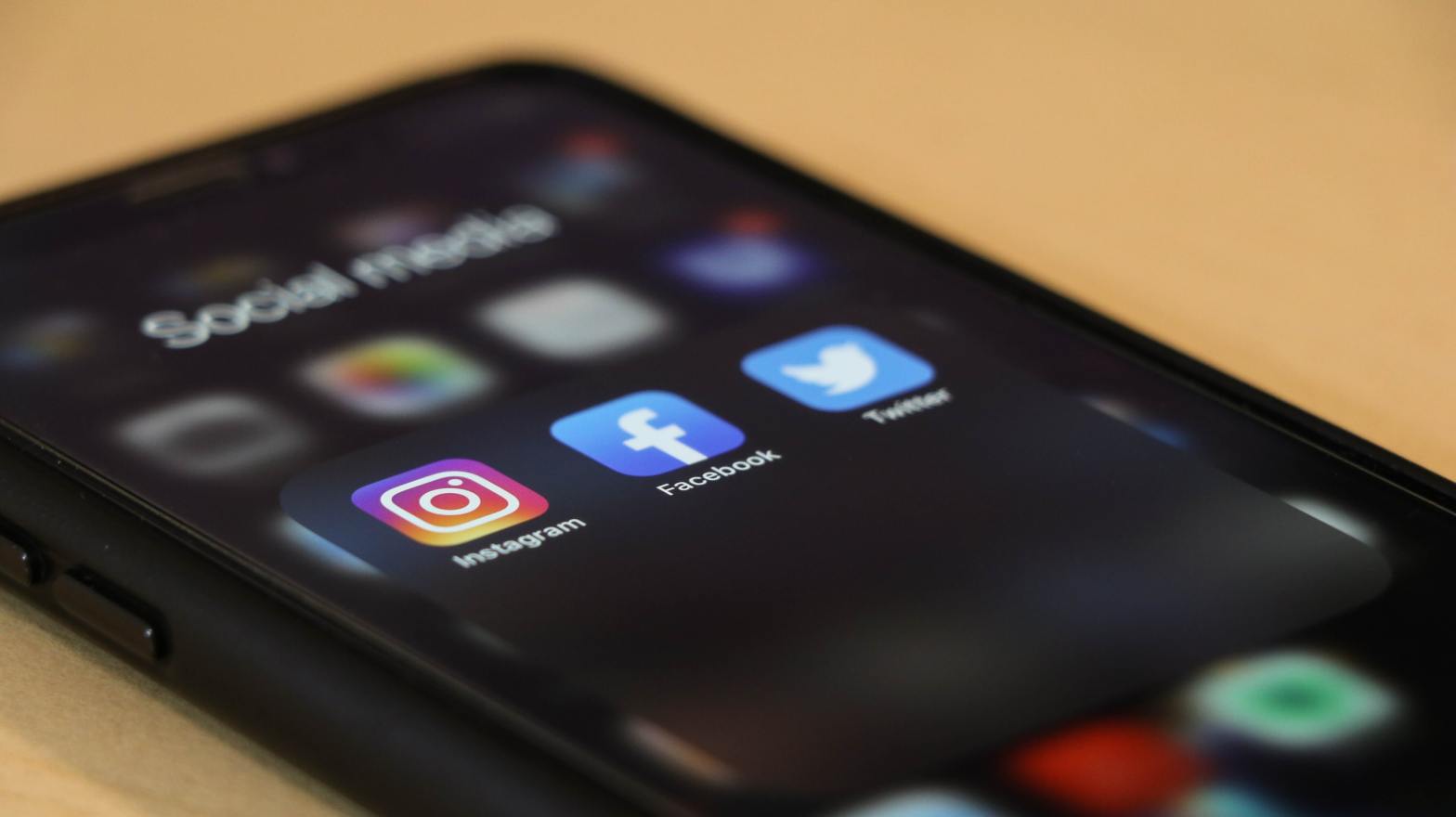
In the era of hashtags, likes, and shares information is available when we want it, where we want it, and how we want it. We have access to a diverse platform of narratives, information, art, and entertainment quite literally at our fingertips.
Social Media provides a stage. Social media forms an opportunity to create an identity for the world to see. What can we do with this stage? What is your identity?
The intersection between social media and activism
Activism has always been a part of our culture. Our country was founded on activism. Ever wonder what it would have been like if George Washington could have gotten his hands on twitter?
The age of social media has created a world where people have a place to share their thoughts with the public, regardless of if you get one like or one million likes, social media provides a chance for your voice to be heard.
The growth of social media throughout the 2000s has been astronomical. The Pew Research Center tracked a 67% increase in social media usage from 2005 to 2019. We see activism enter the arena in a big way around 2013 with the birth of #BlackLivesMatter.
The acquittal of George Zimmerman, following the murder of Trayvon Martin triggered a social media revolution. It became a place where people could be angry, upset, confused, not just share what they were eating for dinner that night. Since then we have seen the emergence of #metoo, #lovewins, and #timesup among other powerful movements.
Accessibility
The increased popularity of social media has increased the amount of accessible information and news, for better or for worse. In an instant you can see what is trending on twitter, what the president has most recently said, or what your favorite celeb is sharing. With that, it is vital to remember what with a downpour of information can come a flood of misinformation. One of the things that is beautiful about social media is that there is little filtration of information, we are allowed to share what we want to share. As a viewer, however this can be misleading and lead to false information or illegitimate news. Use social media as a stepping off point, don’t fall victim to click bait, look past the first article or post you see.
Not only is the intake of information more available but the sharing of information is more participatory as a result of the evolution of social media. Social media gives a larger group of people the opportunity to act. A category of individuals who benefits greatly from this opportunity is the youth in our communities. This is a category of people who are not old enough to vote, who may not have their own money to spend, but they have voices with just as much power and oftentimes even more knowledge than their elders. Remarkable youth like Emma González, who led the March for Our Lives movement have shown just how important it is for young people to have the ability to become activists, social media is one resource that promotes this.
Trends and challenges and hashtags, oh my!
One of the reasons social media is such an effective tool for activists is the speed of sharing, and determination of users to feel a part of a social media trend or movement. You can use that determination to your advantage! Kick start your cause through a challenge or thread people will want to participate in. We have seen immense success from this tactic on a number of occasions. One in particular that took over social media was the ALS ice bucket challenge. Our timelines were flooded with people dumping buckets of ice water on themselves to raise awareness for Amyotrophic Lateral Sclerosis (ALS). With all of that being said, efforts must not end with a singular post. Finding ways to maintain relevance is necessary for success as an online activist.
One great way to do this is through the creation and consistent use of hashtags. Hashtags have the power to become more than a post. They can become the movement. #MeToo lit a fire with a single tweet. While the Me Too movement had begun nearly ten years prior, social media made the movement even more visible. It encouraged individuals to come forward expressing “MeToo”, they too had experienced sexual assault. This allowed survivors to share their story and or see they were not and are not alone. These movements along with others like them always had the importance. Social media gave them the platform they needed in order to be amplified and reach a wider audience.
Starting to use social media as an activist
When using your platform to become an activist take the time to reflect first. Start by determining your personal core values or your company’s core values. Next, consider how you can best share those values and turn them into goals. Before taking to your platform, do your research. Is there a larger group already supporting this cause if so, how can you help them promote their cause through your social media? If not, find organizations with similar values to help share your goals; there is great strength in numbers. Being an activist is about giving a voice to a mission. What needs to be said? Finally, consider how you can best tailor your information to your audience. So, to break that down:
What do you care about?
What are your goals in relation to what you care about?
To whom and how will you best share this passion.
Activism is about action, and sometimes getting wrapped up in social media we forget that. Even in the age of social media it is important to remember that while social media creates an incredible stage people create change.





 Samantha Levinson